Nepal China Border Disaster: Death Toll Rises as Lake Floods
What happened at the Nepal-China border
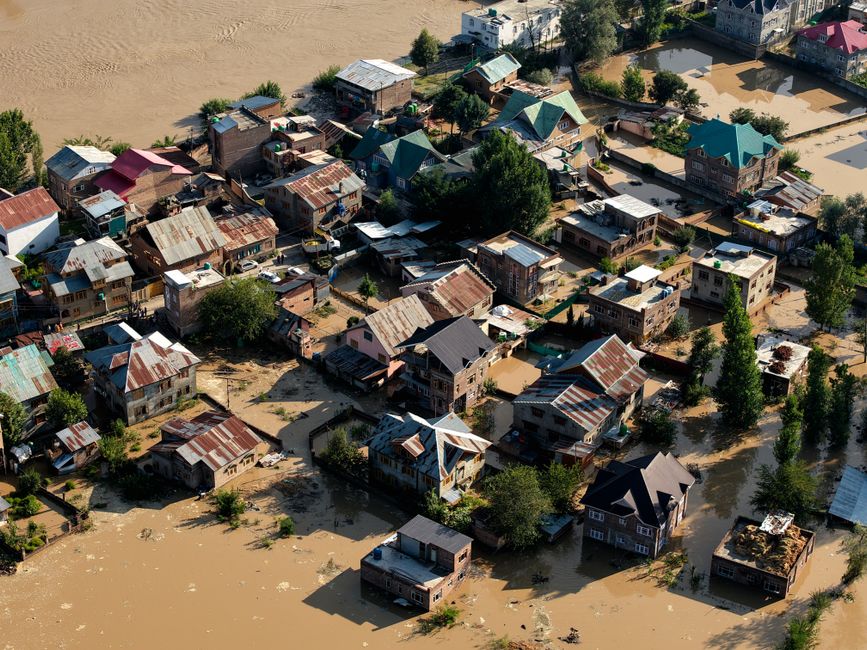
A devastating disaster along the remote Nepal-China border has pushed the regional death toll higher, with rescue teams now racing against a secondary threat: a newly formed glacial lake that officials warn could burst and unleash fresh flooding on communities still reeling from the initial catastrophe. The event began when a massive collapse of bedrock and glacier material sent torrents of water and debris surging through mountain valleys, according to satellite imagery reviewed by news outlets. The collapse itself, and the rivers that flooded in its wake, have transformed the high-altitude landscape and left downstream villages cut off, damaged, or entirely washed away.
Multiple outlets, including AP News and CBS News, report that the death toll has continued to climb in the days since the collapse, while more than 2,000 people remain unaccounted for. The figure reflects both the scale of the population in the affected valleys and the difficulty of reaching remote settlements where communications and road access have been severed. Families of the missing have gathered in towns with mobile signal, posting photographs and waiting for any word.
How the disaster unfolded
Satellite images analyzed and published by AP News show a clear sequence: a section of mountain above the border gave way, sending rock and ice downslope. The debris entered river systems feeding both Nepalese and Chinese territory, and the resulting wall of water traveled far beyond the collapse site. Because the affected area sits at the meeting point of two national jurisdictions, early information was fragmented, and the true scale of the damage became clear only after images were reviewed and cross-referenced.
Why a glacial lake is now the biggest concern
Even as search-and-rescue operations press forward, hydrologists and emergency planners have flagged a different and more immediate danger: a glacial lake that has formed behind the debris field. When a landslide or glacier collapse dams a river, the water held back can grow rapidly. If that natural dam fails, it can release a sudden, catastrophic flood known as a glacial lake outburst flood, or GLOF. The phenomenon is well documented in the Himalayas, where warming temperatures and shifting ice have already increased the frequency of such events.
What a glacial lake outburst flood would mean
A GLOF does not behave like a normal river flood. The water can arrive as a fast-moving wall carrying mud, boulders, and uprooted trees, capable of destroying bridges, homes, and farmland in minutes. Because the new lake sits upstream of communities that have already been hit once, emergency managers are treating the possibility of a second wave as a live threat, not a theoretical one. Monitoring teams have been deployed to track water levels, and authorities are preparing evacuation plans for villages that could be in the path of any sudden release.
Rescue efforts and the search for the missing
Rescue operations have intensified across the disaster zone, with Nepalese security forces, local volunteers, and international aid groups working in difficult mountain terrain. Helicopters have been used where weather and altitude allow, while ground teams have pushed into valleys accessible only on foot. The official missing persons list has grown past 2,000, a number that reflects both the population at risk and the slow process of confirming who has been accounted for in isolated communities.
Among those reported missing are foreign nationals. CNN has reported that at least 90 Americans are unaccounted for, including a New York teenager and her mother. Their families have spoken publicly about the agonizing uncertainty, describing how they learned of the disaster through news alerts and have since struggled to obtain reliable information from a region with limited mobile coverage and damaged infrastructure. The involvement of foreign visitors has drawn international attention to a crisis unfolding in one of the most remote parts of the Himalayas.
Challenges facing rescue teams
Relief efforts are being slowed by the same geography that made the disaster so destructive. Many of the affected villages sit at elevations where thin air limits how long crews can work, and where helicopter operations depend on narrow weather windows. Roads and footbridges have been destroyed, forcing rescuers to reach survivors and recover the deceased on foot. Communication networks are intermittent, and the list of the missing is constantly being updated as reports come in from remote settlements.

Broader context: a region already on edge
The Nepal-China border runs along some of the highest terrain on Earth, including sections of the Himalayas where glaciers feed major river systems. Scientists have warned for years that these regions are particularly vulnerable to rapid environmental change. As average temperatures climb, glaciers retreat and the volume of meltwater increases, raising the baseline risk of unstable slopes, sudden collapses, and the formation of new glacial lakes in places that previously held solid ice.
Why this disaster is being watched beyond Nepal
Because the rivers affected flow into larger systems that ultimately serve densely populated regions in South Asia, the disaster is being monitored closely by downstream governments and international agencies. Even events that begin as small slope failures in a remote valley can have consequences hundreds of kilometers away when they add large volumes of sediment and water to river basins already under stress. For now, the immediate focus remains on the communities closest to the collapse, but the long-term implications for water management and early-warning systems across the region are already part of the conversation.
What is being done to address the lake threat
Engineers and emergency planners are evaluating options for the newly formed lake, even as rescue work continues. In past Himalayan events, crews have used controlled releases, siphons, and in some cases excavation to lower lake levels and reduce the risk of an uncontrolled breach. The choice of method depends on the dam's stability, the volume of water behind it, the terrain, and the time available. Any intervention carries its own risks, and decisions are being weighed against the danger of doing nothing.
Evacuation and early warning
Local authorities have begun identifying villages that would be in the flood path if the natural dam gave way, and have started moving residents to higher ground or to designated safe areas. Simple early-warning tools, including sirens, mobile alerts, and river-level monitoring stations, are being installed or repaired where possible. Community leaders have played a key role in relaying information in languages and dialects that outside responders do not speak, underscoring how local knowledge is often the first line of defense in mountain disasters.

How the death toll has been reported
Confirming fatalities in a disaster of this kind is a slow process. Bodies must be recovered, identified, and matched against family reports, and many areas remain inaccessible. Initial death toll figures have risen steadily as ground teams reach new locations and as hospitals and morgues in larger towns receive patients and remains from outlying villages. News organizations, including AP News and CBS News, have updated their counts as official sources release new information, and the final toll is not expected to be known for some time.
The human side of the missing persons list
Beyond the numbers are the individual stories. The case of the New York teenager and her mother, reported by CNN, is one of several that have drawn public attention to the wider crisis. Families of the missing have organized online, sharing information and pressing authorities for updates. In a region where record-keeping can be informal, especially in remote high-altitude communities, the effort to confirm who is alive and who is not is painstaking and deeply personal.
What readers should know going forward
Information about the Nepal-China border disaster is still developing, and several key variables remain in flux: the final death toll, the total number of people who will be confirmed missing or safe, the stability of the glacial lake, and the effectiveness of evacuation measures already underway. News outlets continue to update their coverage as new figures and verified satellite images become available. Readers looking for the most current information should consult a combination of wire services with reporters in the region and official statements from Nepalese and Chinese authorities.
How to follow reliable updates
For ongoing coverage, the most consistent reporting has come from major wire services with established presence in South Asia, along with international broadcasters maintaining correspondents in Kathmandu and Beijing. Local Nepali-language outlets are also providing granular detail from affected districts, though their reporting may not always reach English-language audiences. Aid organizations active in the region are publishing situation reports that can help distinguish confirmed facts from early, unverified claims.

Direct answer: what is happening in the Nepal-China border disaster
The Nepal-China border disaster began with a major collapse of bedrock and glacier that sent floodwaters through mountain valleys, killing an as-yet-unconfirmed number of people and leaving more than 2,000 missing. The death toll has continued to rise as rescuers reach new areas, and a secondary threat has emerged in the form of a newly formed glacial lake held back by debris, which authorities warn could burst and cause another catastrophic flood. Rescue and evacuation efforts are underway, but the combination of extreme terrain, damaged infrastructure, and unstable upstream conditions means the crisis is not yet under control.
Frequently asked questions
What is the Nepal-China border disaster?
It is a catastrophic event in which a section of bedrock and glacier along the high-altitude Nepal-China border collapsed, sending floodwaters through downstream valleys and causing a rising death toll, with more than 2,000 people reported missing.
Why is a glacial lake now a flood threat in Nepal?
The collapse dammed a river and created a new glacial lake held back by unstable debris. If that natural dam fails, it could release a sudden glacial lake outburst flood that would hit communities already damaged by the first wave.
How many people are missing in the Nepal flood disaster?
More than 2,000 people are reported missing in the Nepal flood disaster, according to CBS News, while CNN has reported that at least 90 Americans are among the unaccounted, including a New York teenager and her mother.
What caused the Nepal-China border flood?
Satellite imagery reviewed by AP News shows that a bedrock and glacier collapse on the Nepal-China border triggered the flooding, with the resulting debris entering river systems that carried the water and sediment into populated valleys.